Author Archives: George Probst

About George Probst

George Probst is an award-winning American photographer best known for his underwater great white shark photography at Isla de Guadalupe. In addition to his work underwater, Probst travels to schools, businesses, and communities for public speaking events to discuss the importance of sharks and ocean conservation.

A “Shark Week” worth mentioning

The North Carolina Aquarium at Pine Knoll Shores will be featuring Shark Week from July 26 through August 1. According to their website, Shark Week will “offer a close-up look at these mysterious and often misunderstood predators,” and will offer family-oriented activities including:

  • touching a bamboo shark
  • competing for prizes in Shark Jeopardy
  • classroom activities for children involving shark-related crafts and games
  • a chance to have your picture taken in the replicated jaws of a huge, prehistoric megalodon
  • viewing shark-feeding programs
  • talking to Aquarium divers as they swim with sharks in the Live Dive programs

Sand Tiger Shark at NC Aquarium - Pine Knoll Shores (Living Shipwreck exhibit)

Sand Tiger Shark at NC Aquarium - Pine Knoll Shores (Living Shipwreck exhibit)


Continue reading
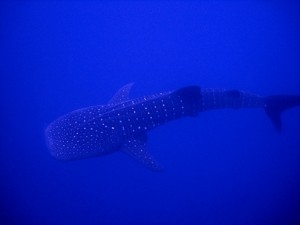
NASA-developed technology to be used to track whale sharks

Whale Shark (Rhincodon typus)

Whale Shark (Rhincodon typus)

CNN’s NASA’s forays yield earthly spin-offs briefly mentions the use of an algorithm originally developed to track star patters, which is now being used to track “endangered animals” including whale sharks.

The article doesn’t go into to much depth about the technology, but it mentions that everyday citizens can contribute to the tracking of these animals by uploading photos of them using services such as Flickr and Facebook.

While not shark-related, I also found it interesting to note that the article lists a few products that have been erroneously credited to being developed by or during NASA space missions. The most notable of these products include Tang and Velcro.

Young White Shark Caught and Released off La Jolla

Juvenile Great White Shark (Carcharodon carcharias)

Juvenile Great White Shark (Carcharodon carcharias)

The San Diego Union Tribune article, Fisherman releases great white, reports that Jeff Patterson, a client of Conway Bowman of Bluewater Bowman, hooked a small great white shark off La Jolla (San Diego, CA) on July 17, 2009. Bowman estimated the shark to be around 6′ (1.8 meters) in length and 150 lbs (68kg) in weight. The white shark was hooked on a a fly-rod and was brought it within 25 minutes of being hooked. After removing the fly from the white shark’s mouth, both Patterson and Conway patted the shark on the head, and then the shark was released back into its natural environment. Bowman was quoted as saying, “To see a great white shark that close is the pinnacle of my guiding career.” Patterson also caught and released 3 mako sharks and 8 blue sharks over the course of his two-day fishing trip with Bowman.

It’s refreshing to see a news article about a white shark without any references to Jaws, monsters, killers, etc. It’s also refreshing to read about responsible fishermen respecting the sharks that they’ve caught and safely releasing them back to their environment. In fact, upon visiting Bowman Bluewater’s website, I was pleasantly surprised to see that they are sponsoring a catch and release mako tournament in which the proceeds of the tournament will go to the Pfleger Institute of Environmental Research, St Jude Children’s Research Hospital, and Casting for Recovery. The proceeds donated to the Pfleger Institute of Environmental Research will be used for research on Southern California mako sharks.

A shark-friendly alternative to shark fin soup…Shark Fin PIE!

Often times my Google News Alerts offer up some non-shark related news, but when I saw a story about Shark Fin Pie, I had to give it a look. Don’t worry. No sharks were harmed in the making of this pie. In fact, the only thing that this pie will likely harm is your teeth, according to the Pioneer Press article, This shark’s trademark is calories, not teeth.

The pie is available at Mitchell’s Fish Market restaurants. It consists of butter fudge ripple ice cream, peanut butter, Oreo cookie crumbs and fudge. Shark Fin Pie stands so tall that a slice of it resembles the appearance of a shark’s dorsal fin, hence the name.

Now, all we have to do is convince shark fin soup consumers to switch over to Shark Fin Pie.

Save the whale…shark

Whale Shark (Rhincodon typus)

Whale Shark (Rhincodon typus)

A whale shark that has been frequently observed over the past month in an area under the Vaca Cut Bridge in Marathon, Florida, recently received some help from local veterinarian Doug Mader, according to the Florida Keys Keynoter.

Mader, who had never seen a whale shark in the wild, jumped in the water with the 7.5 meter (25′) animal and cut loose monofilament fishing line that the shark’s caudal fin had become entangled in. According to Mader, fishing line entanglement can lead to loss of limbs in marine animals due to cutting off blood supply. According to the article, Mader was able to free the shark of the fishing line within “15-20 seconds.” Mader was unable to remove the fish hook from the shark’s caudal fin, which will eventually rust and fall out. Mader also noted that the shark’s caudal fin also had propeller damage, but that he believed the shark would heal just fine.

While whale sharks are typically found in deeper water than that under the Vaca Cut Bridge, Mader suspected that the strong currents and thick plankton are providing the whale shark with a steady food source. While Mader encouraged people to view the shark from the Vaca Cut Bridge, he recommends that people not to enter the water to approach the animal.

“Unprovoked shark attack” at San Onofre?

According to the news section at the Shark Research Committee on July 11, 2009 Brian Hovnanian was involved in an “unprovoked shark attack,” by definition, at least. According to the article an unprovoked attack is defined by “any physical contact between a shark and human, or piece of equipment being utilized by a human, without any know provocative action by the subject which might cause the shark to strike out.”

According to the report, Hovnanian was stand-up paddleboarding when a 5′ shark with a gray back and white underside bumped into his board, hit his calf, and caused him to fall onto the shark and the board. The shark then slid back into the water and swam off.

While I understand the reasoning behind defining an unprovoked shark attack to not necessarily require a victim being bitten, it seems a bit of a stretch to refer to this as an “attack.” Yes, I know that “technically” it meets the criteria of the definition given by the Shark Research Committee, but based on the article it sounds like the shark might have accidentally bumped into the board and ended up on top of it. I’m no expert, but it’s hard to imagine a 5′ shark mistaking a stand-up paddleboard for food and making a bid to attack it from below. Reading a report like this and seeing it deemed as an authenticated attack makes me wonder if shark attack statistics might be over-inflated with similar encounters.

Do we really need “horror” and “terror” on Shark Week?

Yeah, that was a rhetorical question. If I want horror and terror, I’ll watch a horror movie, NOT Shark Week. (Hey, I like Jaws just as much as anybody, but it’s a FICTIONAL horror movie.)

Creativity-Online’s recent article about the promotional website, Frenzied Waters, for the Discovery Channel’s upcoming Shark Week is filled with references to instilling fear into Shark Week’s potential audience. I don’t consider Creativity-Online’s article to be irresponsible journalism, as they are merely reporting on what the Discovery Channel and Campfire have cooked up to promote the upcoming Shark Week. In fact, while Campfire’s promotional website does nothing but perpetuate negative stereotypes about sharks being man-eaters (and apparently, dog-eaters), they are in the business of creating media campaigns that capture attention and were hired to create a fear-based horror-themed campaign. In that respect, Campfire’s campaign for Shark Week sets out to do exactly what they were hired to do. To Campfire’s credit, from a design and technical standpoint, their site is impressively put together, regardless of the content.
Continue reading

Should new laws be passed to protect sharks from overfishing?

That’s the question that the Orlando Sentinel is asking in an online poll. To cast a vote and give your opinion on the subject visit the Orlando Sentinel Back Talk poll.

The Orlando Sentinel also featured a brief opinion piece on “Getting over Jaws.” The article mentions possible tougher restrictions on killing certain shark species in Florida and also mentions the shark attack survivors lobbying for a ban on finning.

CNN report takes a step in the right direction…then their anchors take a step back

CNN’s American Morning ran a segment today around 8:30am EST about the 9 shark attack survivors who are lobbying for the U.S. Congress to support a bill aimed at ending shark finning. The segment featured two of the survivors who spoke about their attacks, and their feelings about sharks after having survived their ordeals. While surfer Mike Coots said he never had any animosity, Debbie Alamone said that it took her a while to get over her animosity. Both are now working with the Pew Environment Group to lobby for a bill that would ban finning. Both survivors stressed the importance of sharks in the marine ecosystem. Coots ended the interview portion of the segment by stating that the issue was “way bigger than the two of us. It’s absolutely incredible, just the amount of sharks being killed.”

A transcript of the interview portion of the segment can be found at CNN’s AM Fix blog. The interview portion of the segment was well done. Unfortunately, as soon as the attack survivors were off camera, CNN anchor John Roberts started in saying how it was “hard to swallow” that shark attack survivors would be lobbying for the protection of sharks. Robert’s co-anchor, whose name escapes me (Kiran Chentry was not on during the segment) then stated that she doesn’t go in the ocean due to her “unnatural” fear of being attacked by a shark. Roberts then brought up Jaws and how he was afraid to swim even in a lake after seeing the film.

If nothing else, at least another story exposing the finning industry is appearing in the main stream media.

A full press release from the Pew Environmental Group on the subject is available at Pew Brings Survivors to Congress to Seek Protections for Sharks That Attacked Them from PR Newswire.

Researchers track a REALLY big bull shark in South Africa

A recent Independent Online article does a great job of objectively covering a research study on a 4m (13′) female bull (or Zambezi) shark, who was “caught, measured and then released and tracked,” in the estuary of the Breede River, which feeds into St Sebastian Bay at Witsand in South Africa.

Researchers believed the shark to be pregnant and concluded that the estuary could be a “nursery” for the species. The researchers also found that the bull shark “spent a considerable amount of its time investigating both shore and boat anglers up and down the river, as well as cast-netters at the mouth of the estuary, and that it frequently swam into water less than 1.5m deep.”

The article mentions the decline in numbers of the species, including it’s ‘near-threatened’ status on the IUCN Red List. Overall, the article does is quite informative without any sensationalism, and it does a good job of address conservations issues.